This crazy Japanese artist has got me thinking recently.
I definatley feel a connection with her and my own work. It's so different, but I feel her obsessiveness, that compulsion to do something again and again and again. Repetative, but for a reason.
Saturday, 22 January 2011
Marino Marini
One of my favorite artists, I can hardley begin to explain why I love Marini. There is something so incredible about his work, so free and freeing to see. Sexual yet innocent at the same time. It reminds me of children being naked on the beach; no shame in their exhibitsionism. But then again, the sexual themes that I'm sure Freud would have picked out with ease of the man and horse are so obvious I almost feel stupid saying it.
But I think there is something deeper in Marini's work than pure sex/beastiality which is so easy to interpret. It's something that makes a man with a massive erection on horseback with his arms spread out beautiful, rather than weird. It makes you smile, and makes you feel liberated rather than sexual or disturbed.
Marini also had his roots in painting, and prepared for sculptures by drawing, which I respect a lot, and alone they are works of art too;
Marini was inspired by Etruscan art (from Nothern Italy between 9th-2nd C BC) and you can see the connection he made with these ancient peoples;
Here are two from the Marini museum in Florence;
But I think there is something deeper in Marini's work than pure sex/beastiality which is so easy to interpret. It's something that makes a man with a massive erection on horseback with his arms spread out beautiful, rather than weird. It makes you smile, and makes you feel liberated rather than sexual or disturbed.
| Where I first saw Marini : at the Guggenhiem in Venice |
" It is very difficult to explain how exactly a work of art is born. In fact, it is almost inexplicable, but at a certain moment an emotion falls upon an artist and for some artists this feeling arrives in a descriptive form, while for others in a world of color. In my case the emotion arrives in color. For example, I have a color that torments me.. let's take perhaps a red, a blue, a yellow - this color continually invades my mind until I begin to put this color onto paper and imagine this color becoming a drawing. Then, all of the sudden, this drawing begins to take form, the form, and this form becomes true form."
| The Angel of the City 1948 |
| Susana 1943 |
![]() |
| Horse and Rider 1947 |
![]() |
| Horseman 1947 |
![]() |
| Juggler 1953 |
![]() |
| Horse and Juggler 1953 |
![]() |
| Juggler and Two Horses, Blue, Yellow and Black 1953 |
Marini was inspired by Etruscan art (from Nothern Italy between 9th-2nd C BC) and you can see the connection he made with these ancient peoples;
![]() |
| Perhaps he got his very male sexual freedom from Greek images such as these |
Here are two from the Marini museum in Florence;
![]() |
| The Great war |
![]() |
| Walking Woman |
Sindney Nolan at the Scott Polar in Cambridge
![]() |
| Whale |
I thought this was a great collection of works by Nolan, I loved the combination of science and art and the way his gloves and gear inhibited (or improved?) his painting style.
The images have so much character, like the landscapes and the sweeping brush marks and the scientists, cold but sweet, in this vast alien landscape. Almost a psychedelic feel to the eyes.
![]() |
| Scientist 1964 |
![]() |
| Mount Erebus 28th August 1964 |
![]() |
| McMurdo Sound 12th September 1964 |
Murray Edwards Female Art in Cambridge
This fine collection of female art is apparently the biggest in Europe, which is shocking 'cos it's still quite small. Too small! We need more female art and support for it in our museums, galleries and culture. Here are some brilliant examples of female artists work. If you're into feminism and art, I strongly advise you visit this website: http://www.guerillagirls.com/ with whom I agree and support.
![]() |
| Rose Garrard - Madonna Cascade 1992 |
![]() |
| Evelyn Williams - All night through 1942 |
![]() |
| Maggi Hambling - Gulf Women Prepare for War 1986 |
![]() |
| Monica Sjoo - Earth is our Mother |
Whitechapel 2010
Wednesday, 12 January 2011
Tate Britain: New Collection
The Tate B hasn't changed it's perminant collection for ages, but now they have. Here are some of my fav. new pieces dragged from the cold, dark cellars and into the light of the public eye once more;
Q. To begin with, could you describe this work?
A. Yes, of course. What I've done is change a glass of water into a full-grown oak tree without altering the accidents of the glass of water.
Q. The accidents?
A. Yes. The colour, feel, weight, size ...
Q. Do you mean that the glass of water is a symbol of an oak tree?
A. No. It's not a symbol. I've changed the physical substance of the glass of water into that of an oak tree.
Q. It looks like a glass of water.
A. Of course it does. I didn't change its appearance. But it's not a glass of water, it's an oak tree.
Q. Can you prove what you've claimed to have done?
A. Well, yes and no. I claim to have maintained the physical form of the glass of water and, as you can see, I have. However, as one normally looks for evidence of physical change in terms of altered form, no such proof exists.
Q. Haven't you simply called this glass of water an oak tree?
A. Absolutely not. It is not a glass of water anymore. I have changed its actual substance. It would no longer be accurate to call it a glass of water. One could call it anything one wished but that would not alter the fact that it is an oak tree.
Q. Isn't this just a case of the emperor's new clothes?
A. No. With the emperor's new clothes people claimed to see something that wasn't there because they felt they should. I would be very surprised if anyone told me they saw an oak tree.
Q. Was it difficult to effect the change?
A. No effort at all. But it took me years of work before I realised I could do it.
Q. When precisely did the glass of water become an oak tree?
A. When I put the water in the glass.
Q. Does this happen every time you fill a glass with water?
A. No, of course not. Only when I intend to change it into an oak tree.
Q. Then intention causes the change?
A. I would say it precipitates the change.
Q. You don't know how you do it?
A. It contradicts what I feel I know about cause and effect.
Q. It seems to me that you are claiming to have worked a miracle. Isn't that the case?
A. I'm flattered that you think so.
Q. But aren't you the only person who can do something like this?
A. How could I know?
Q. Could you teach others to do it?
A. No, it's not something one can teach.
Q. Do you consider that changing the glass of water into an oak tree constitutes an art work?
A. Yes.
Q. What precisely is the art work? The glass of water?
A. There is no glass of water anymore.
Q. The process of change?
A. There is no process involved in the change.
Q. The oak tree?
A. Yes. The oak tree.
Q. But the oak tree only exists in the mind.
A. No. The actual oak tree is physically present but in the form of the glass of water. As the glass of water was a particular glass of water, the oak tree is also a particular oak tree. To conceive the category 'oak tree' or to picture a particular oak tree is not to understand and experience what appears to be a glass of water as an oak tree. Just as it is imperceivable it also inconceivable.
Q. Did the particular oak tree exist somewhere else before it took the form of a glass of water?
A. No. This particular oak tree did not exist previously. I should also point out that it does not and will not ever have any other form than that of a glass of water.
Q. How long will it continue to be an oak tree?
A. Until I change it.
A thought provoking piece. It bugged me all day.
![]() |
| Ben Nicholson '1939' |
| This piece struck me, very smooth and human form like. |
| Nuam Gabo ' Construction: Stone with a collar' 1933 |
![]() |
| Sarah Lucas 'Bunny' |
I love this piece and the way it's been photographed, it almost looks real. So sexual, disturbing and erotic.
![]() |
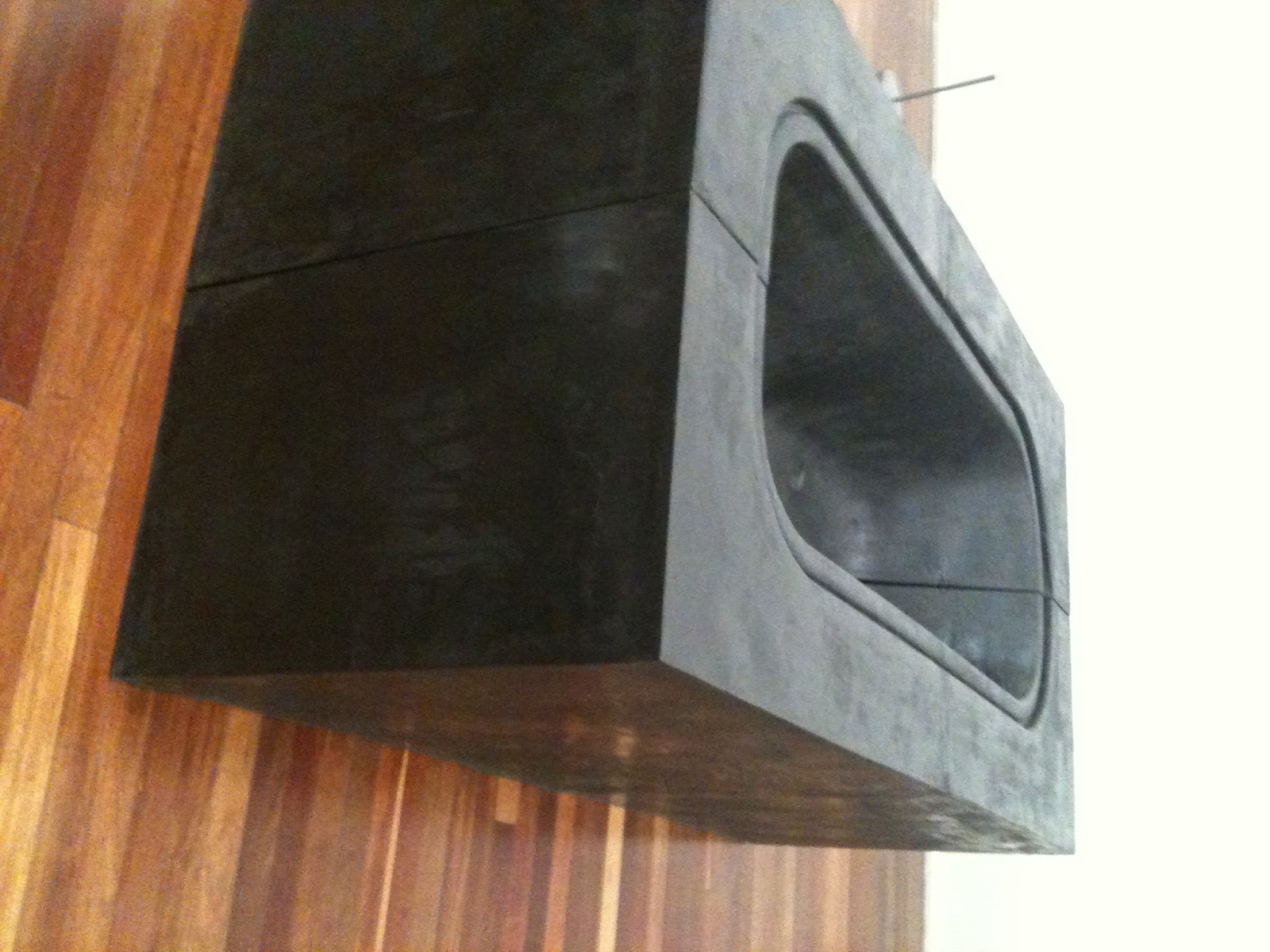
| Rachel Whiteread 'Untitled (Black Bath)' 1996 |
![]() |
| Fiona Banner 'Top Gun' 1994 |
![]() |
| Richard Hamilton 'The citizen' 1981 |
![]() |
| Helen Chadwick 'Enfleshings I' 1989 |
![]() |
| Michael Craig Martin 'An Oak Tree' 1973 |
A. Yes, of course. What I've done is change a glass of water into a full-grown oak tree without altering the accidents of the glass of water.
Q. The accidents?
A. Yes. The colour, feel, weight, size ...
Q. Do you mean that the glass of water is a symbol of an oak tree?
A. No. It's not a symbol. I've changed the physical substance of the glass of water into that of an oak tree.
Q. It looks like a glass of water.
A. Of course it does. I didn't change its appearance. But it's not a glass of water, it's an oak tree.
Q. Can you prove what you've claimed to have done?
A. Well, yes and no. I claim to have maintained the physical form of the glass of water and, as you can see, I have. However, as one normally looks for evidence of physical change in terms of altered form, no such proof exists.
Q. Haven't you simply called this glass of water an oak tree?
A. Absolutely not. It is not a glass of water anymore. I have changed its actual substance. It would no longer be accurate to call it a glass of water. One could call it anything one wished but that would not alter the fact that it is an oak tree.
Q. Isn't this just a case of the emperor's new clothes?
A. No. With the emperor's new clothes people claimed to see something that wasn't there because they felt they should. I would be very surprised if anyone told me they saw an oak tree.
Q. Was it difficult to effect the change?
A. No effort at all. But it took me years of work before I realised I could do it.
Q. When precisely did the glass of water become an oak tree?
A. When I put the water in the glass.
Q. Does this happen every time you fill a glass with water?
A. No, of course not. Only when I intend to change it into an oak tree.
Q. Then intention causes the change?
A. I would say it precipitates the change.
Q. You don't know how you do it?
A. It contradicts what I feel I know about cause and effect.
Q. It seems to me that you are claiming to have worked a miracle. Isn't that the case?
A. I'm flattered that you think so.
Q. But aren't you the only person who can do something like this?
A. How could I know?
Q. Could you teach others to do it?
A. No, it's not something one can teach.
Q. Do you consider that changing the glass of water into an oak tree constitutes an art work?
A. Yes.
Q. What precisely is the art work? The glass of water?
A. There is no glass of water anymore.
Q. The process of change?
A. There is no process involved in the change.
Q. The oak tree?
A. Yes. The oak tree.
Q. But the oak tree only exists in the mind.
A. No. The actual oak tree is physically present but in the form of the glass of water. As the glass of water was a particular glass of water, the oak tree is also a particular oak tree. To conceive the category 'oak tree' or to picture a particular oak tree is not to understand and experience what appears to be a glass of water as an oak tree. Just as it is imperceivable it also inconceivable.
Q. Did the particular oak tree exist somewhere else before it took the form of a glass of water?
A. No. This particular oak tree did not exist previously. I should also point out that it does not and will not ever have any other form than that of a glass of water.
Q. How long will it continue to be an oak tree?
A. Until I change it.
A thought provoking piece. It bugged me all day.
![]() |
| Naum Gabo 'Model for Constructed torso' 1917 |
![]() |
| Eric Gill 'Ecstasy' 1910 |
![]() |
| Stanley Spencer 'Double Nude Portrait: The Artist and his Second Wife' 1937 |
![]() |
| (Obviously) Francis Bacon 'Three Studies for Figures at the Base of the Crucifixtion' 1944 |
![]() |
| Roger Hilton 'February 1954' |
![]() |
| John Latham 'Belief System' 1959 |
![]() |
| Kenneth Armitage 'Diarchy' 1957 |
![]() |
| Keith Vaughan 'Theasus and the Minatare' 1950 |
![]() |
| (The great) Gilbert and George 'Red Morning Trouble' 1977 |
![]() |
| Tracey Emin 'Monument Valley' 1995 |
Subscribe to:
Posts (Atom)